
Temperature Controlled Truck Rental in the UAE — Chilled, Frozen and Dual-Zone
Chiller Logistics runs temperature controlled trucks across three temperature bands and four tonnages, from a 3-ton city vehicle to a 12-pallet 10-ton, starting at 400 AED per day. Chilled, frozen, or both compartments at once — the fleet covers the full range of bulk cold chain work across Abu Dhabi, Dubai and the wider UAE.
The question is rarely which truck. It’s which band your cargo needs, and that decision comes before tonnage, before pricing, and before anything else. Get the band right and the rest follows. Get it wrong and no amount of capacity fixes it.
Tell us your cargo and pallet count — call or WhatsApp to check availability.
Three Temperature Bands, One Fleet
Every temperature controlled truck falls into one of three classes. They look similar from outside and they are built differently inside.
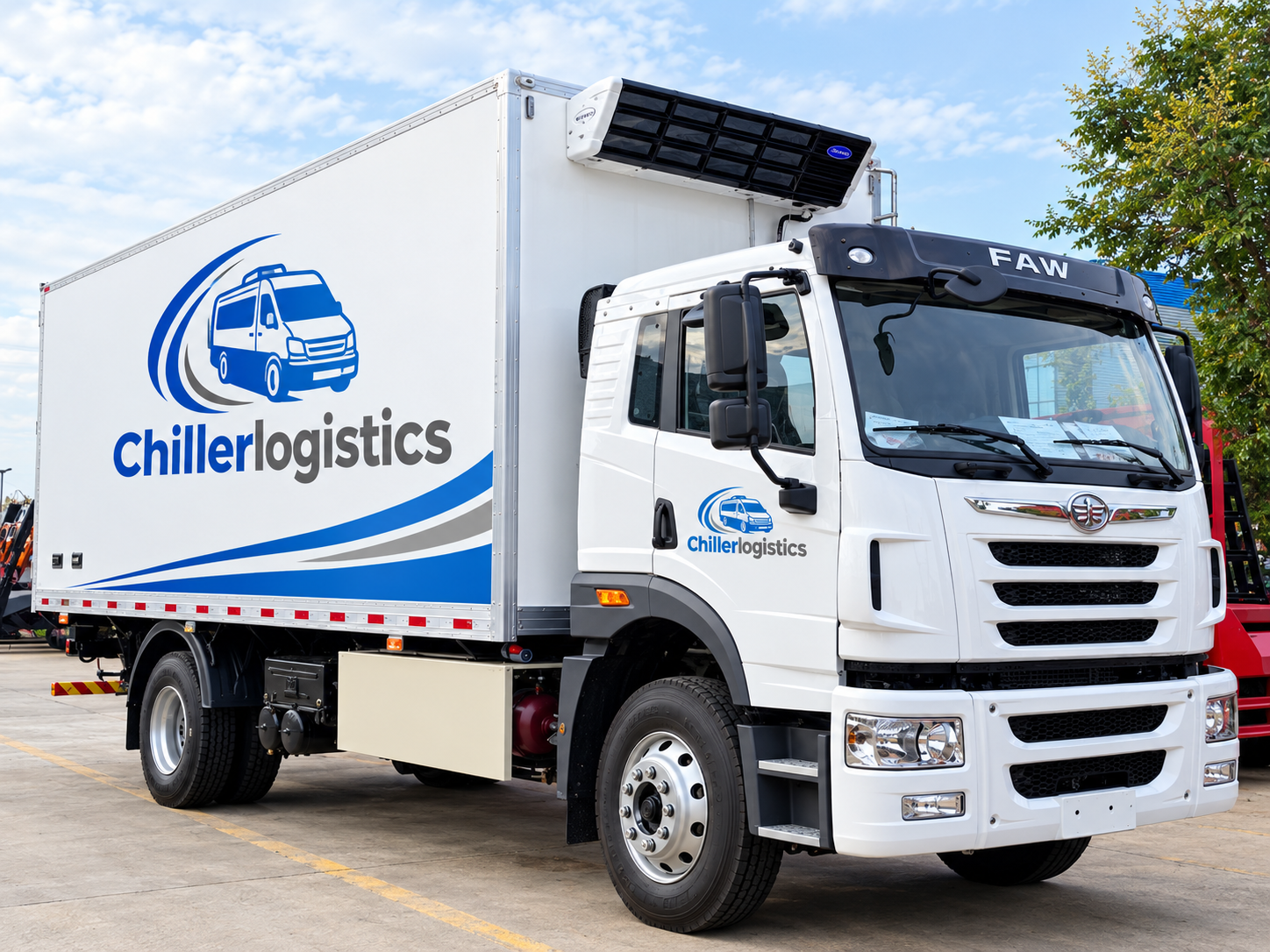
Chilled — 0°C to +8°C
Single-zone cooling for cargo that must stay cold without freezing: fresh produce, dairy, chilled beverages, bakery, prepared food, fresh meat and pharmaceutical stock. This is the highest-volume class in the UAE cold chain and the one most bulk distribution runs on — supermarket restocking, wholesale food, hotel and catering supply. Not the class for anything frozen, because a chilled unit cannot reach sub-zero at all. Full specifications, tonnage breakdown and rates on our chiller truck rental page.
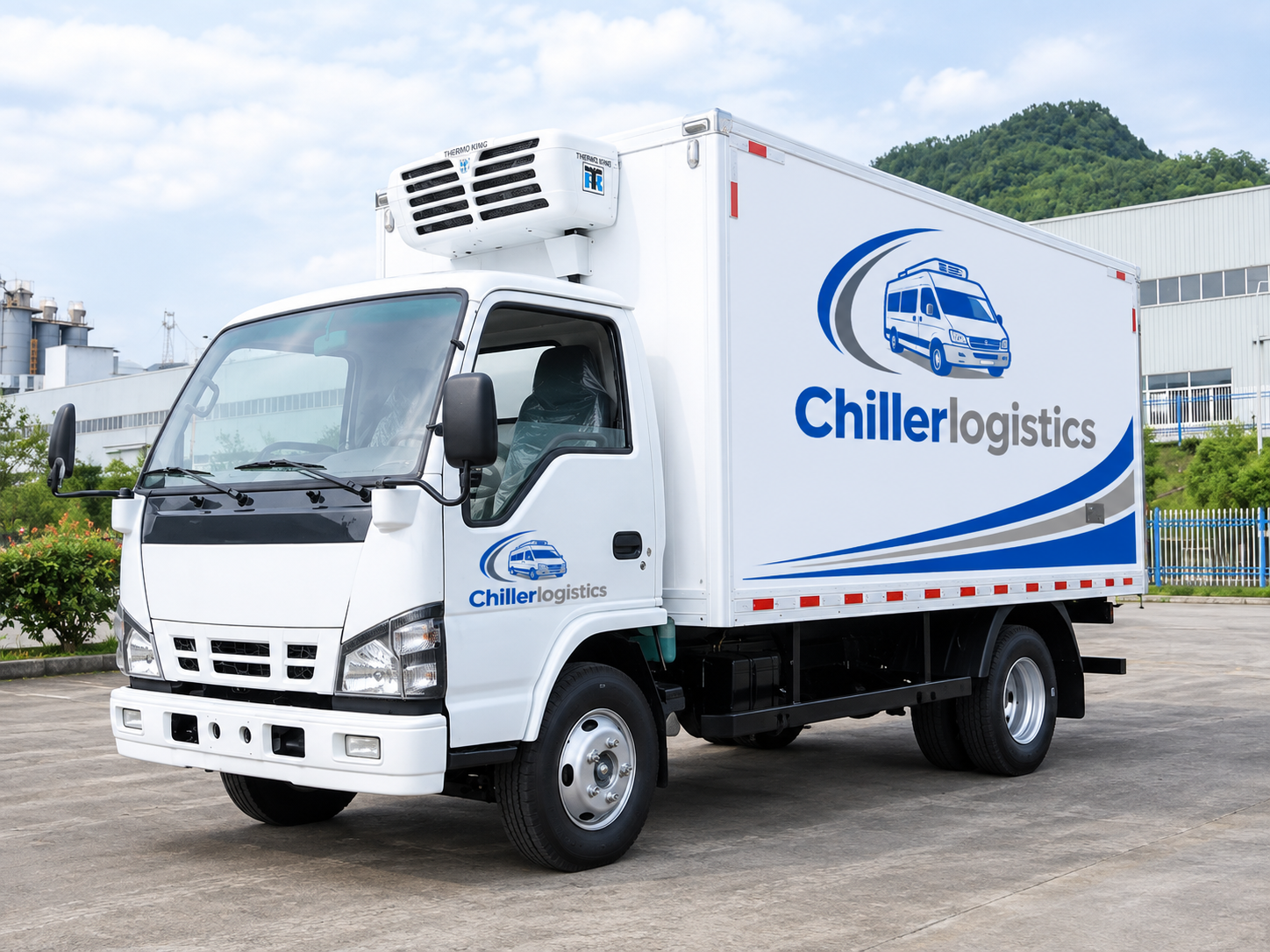
Frozen — −18°C to −25°C
Sub-zero transport for cargo that must stay solid: frozen meat and poultry, seafood, ice cream and frozen dessert, frozen ready meals and bakery dough. Built heavier than the chilled equivalent at every tonnage — more insulation, a higher-capacity compressor, and a unit holding a gradient three times wider. Wrong for fresh produce, dairy or flowers, which take damage as they approach freezing. Specifications and rates on our freezer truck rental page.
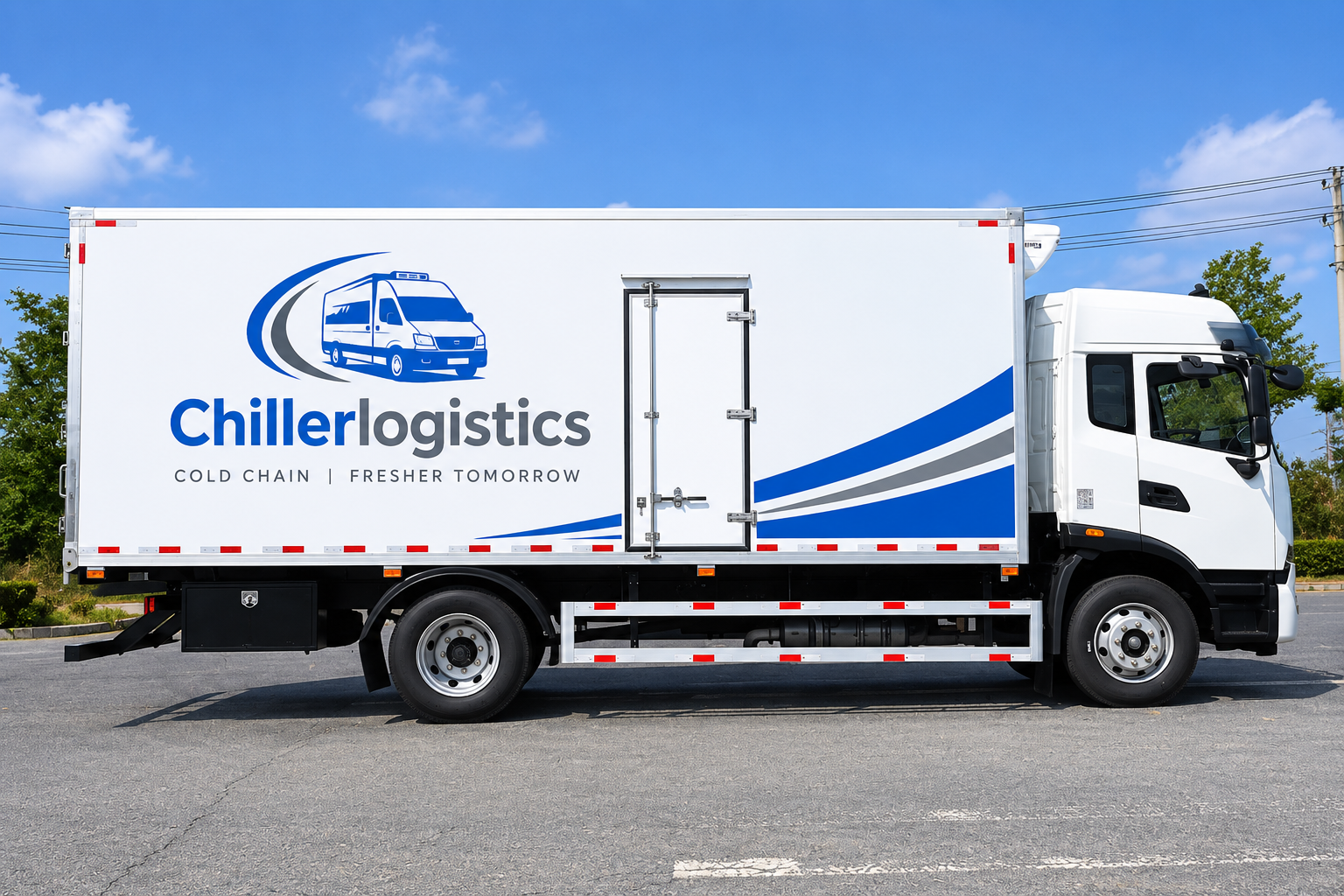
Dual-zone — both at once
Two independently controlled compartments with a movable insulated bulkhead, so chilled and frozen travel in the same vehicle on the same route. Built for mixed loads — caterers, retail restocking, hotel supply — where sending two trucks means two drivers, two arrival slots and two loading windows. Not the economical choice when each side would fill a truck on its own. Splits, configurations and rates on our dual-zone refrigerated truck rental page.
Which Class Your Cargo Needs
Start with the product’s required temperature, not the vehicle’s name. The class follows from the cargo every time.
Cargo
| Band | Class |
|---|---|---|
| Fresh produce, vegetables, herbs | Chilled | Chiller truck |
| Dairy, laban, cheese, chilled beverages | Chilled | Chiller truck |
| Fresh meat and poultry | Chilled | Chiller truck |
| Bakery, prepared meals, chilled desserts | Chilled | Chiller truck |
| Flowers and floral stock | Chilled | Chiller truck |
| Pharmaceutical and clinic stock | Chilled | Chiller truck |
| Frozen meat, poultry, seafood | Frozen | Freezer truck |
| Ice cream and frozen dessert | Frozen | Freezer truck |
| Frozen ready meals and dough | Frozen | Freezer truck |
| Supermarket restocking, both aisles | Both | Dual-zone |
| Event catering, chilled prep plus frozen protein | Both | Dual-zone |
Three ways this goes wrong:
Frozen cargo in a chilled box. The unit cannot reach sub-zero, so the load starts softening from the moment the box is warmer than the cargo. There is no short enough trip for this in UAE heat.
Chilled cargo in a frozen box. People assume a freezer is the safe default because it can be set warmer. Dairy, soft fruit, salad leaves and flowers are damaged as they approach freezing, and you are paying for a heavier build than the cargo needs.
A mixed load at a compromise setting. Chilled and frozen in one single-zone box, set somewhere in the middle, protects neither half. That is what the dual-zone class exists for.
3, 5, 7 or 10 Ton — Sizing Across All Three Classes
All three classes run the same four tonnages, which is less common in this market than it sounds. Plenty of fleets offer 3, 7 and 10 tons and skip the 5-ton entirely — which matters, because the 5-ton is the volume most distributors actually need. It carries half again what a 3-ton holds without crossing into heavy licence territory, and it covers hotel supply, wholesale catering and multi-outlet retail in a single load.
Size by pallet count rather than tonnage. Tonnage is a weight rating, and on most chilled cargo the box fills by footprint long before it fills by weight. Flip it on dense frozen protein or bottled drinks and you hit the payload ceiling with floor space to spare. Two numbers settle it: how many pallets, and roughly how heavy each one is.
One thing worth knowing before you compare quotes elsewhere. Published pallet counts are often derived from external body length rather than the insulated space your cargo actually occupies — and the difference runs to a pallet or two on a mid-size box. Our figures are measured internally, after panel installation, and they sit on each class page alongside the rates. For the full reasoning, see our guide on how to choose a refrigerated truck.
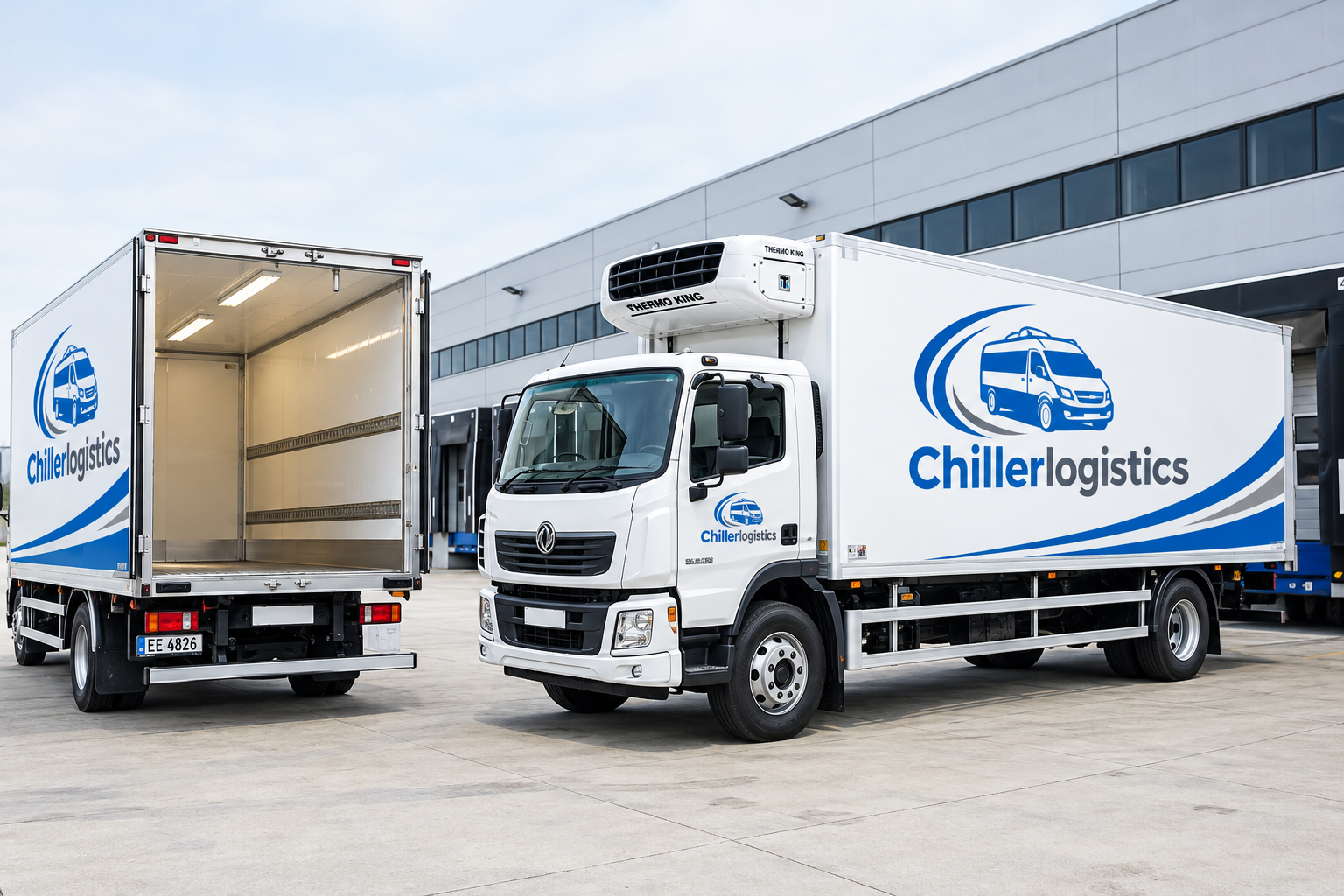
What Stops a Truck Booking in the UAE
Two things end more truck bookings than temperature or capacity ever do, and neither usually comes up until collection day.
Licence class. Light vehicle licences cover the smaller truck classes. Anything above 3.5 tonnes gross needs a Category 4 heavy vehicle licence, which means self-drive on the larger classes is only available where your own driver holds one. Most buyers planning self-drive find this out at the counter. Check what your people hold before you compare rates across tonnages — and if nobody has Category 4, taking one of our drivers removes the constraint entirely at 100–150 AED per day.
Gate access. Abu Dhabi’s industrial zones are gated, and the gates check the vehicle as well as the cargo. ASATEEL registration — the Abu Dhabi ITC’s on-board tracking requirement — is what gets a commercial vehicle through ICAD, KIZAD, Mussafah and the free-zone barriers without a clearance wait. A truck without it is a truck that sits at the barrier, and this is specifically a truck problem rather than a van one, because the industrial zones are where the bulk cold chain volume sits. Our full fleet is registered.
At the delivery end, ADAFSA verification is what the receiving bay checks before accepting a food delivery. Hotels, hospitals and hypermarkets turn away unverified vehicles, and the loss falls on the supplier.

Where Our Temperature Controlled Trucks Run
Abu Dhabi carries the majority of our truck work. Our trucks run Mussafah M1–M45 and ICAD I, II and III, KIZAD and Khalifa Port, Abu Dhabi city and Khalifa City, Yas and Saadiyat, and out to Al Ain and the Western Region. The heavier classes suit the industrial and port work; the 3 and 5-ton handle city centre and island delivery, where turning circles and loading bay clearance rule out anything larger.
Dubai runs on the same rates and terms, with Al Quoz, Ras Al Khor, Deira, Jebel Ali and Dubai Investment Park all standard territory. The Abu Dhabi–Dubai corridor is a route we have run for fourteen years, and our Dubai Municipality food transport permit covers the cargo on arrival.
Al Ain is a steadier market than most operators expect — agricultural collections, fresh produce distribution and institutional supply, served on the longer runs out of Abu Dhabi.
Temperature controlled truck hire also extends to Sharjah and Ajman, where our Sharjah Municipality permit covers perishable cargo through the industrial areas, and on to Ras Al Khaimah, Fujairah and Umm Al Quwain.
Why UAE Businesses Rent Our Temperature Controlled Trucks
Bulk cold chain is high-value cargo on someone else’s vehicle. Here is what stands behind ours.
Forty trucks across three classes and four tonnages — the class you need is available rather than the class that happens to be free, and a replacement goes out if a unit fails with your cargo on board
Certified at both ends of the route — HACCP for the box itself, ADAFSA for the Abu Dhabi receiving bay, ASATEEL for industrial zone gate access, Dubai and Sharjah Municipality permits for cross-emirate work
Built for this market’s heat, not adapted to it — units and insulation specified to hold set point through a full working day in peak summer rather than drifting once the afternoon starts
Serviced before failure, not after — owned fleet maintained at our own workshop, with refrigeration units on a schedule instead of waiting for a call from a driver on a route
Operating since 2012 — fourteen years of UAE summers, long enough to know what heat does to equipment that was never built for it
Frequently Asked Questions
A chilled truck holds 0°C to +8°C across one zone, a frozen truck holds −18°C to −25°C, and a dual-zone truck runs two independently controlled compartments at once. The build differs too — frozen units carry heavier insulation and higher-capacity compressors.
A dual-zone truck, unless each side of the load would fill a truck on its own. At that point two single-zone vehicles carry more total cargo for less per ton, and we would tell you to book those instead.
Yes. The controllers set across the full band, so a truck can run chilled one week and sub-zero the next. A dedicated single-zone vehicle rents cheaper if that is most of your work.
All three classes run 3, 5, 7 and 10 tons — from 4 Euro pallets up to 12. Exact pallet counts and payloads are on each class page.
Above 3.5 tonnes gross, yes — a Category 4 heavy vehicle licence. The lighter classes are covered by a standard light vehicle licence, and taking one of our drivers removes the requirement at any tonnage.
On our 5, 7 and 10-ton trucks, yes — those carry standalone diesel units that run independently of the vehicle engine. The 3-ton and the van classes are direct-drive with electric standby for stationary cooling.
Yes. Abu Dhabi is our primary market, Dubai the busiest secondary, with scheduled routes to Al Ain, Sharjah, Ajman, Ras Al Khaimah, Fujairah and Umm Al Quwain.
Book a Temperature Controlled Truck in the UAE
Temperature controlled truck rental starts at 400 AED a day across three classes and four tonnages. Tell us the cargo, the temperature it needs to hold and your pallet count, and we will confirm the class, the size and a firm rate — deposit waived on approved corporate monthly contracts.